Friday, January 29, 2016

01/29 RENEE ARY, DUCKHORN VINEYARDS, ROB JENSEN, TESTAROSSA WINERY

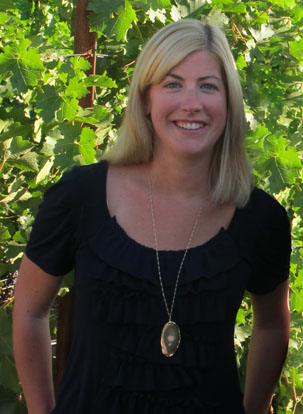
RENEE ARY – WINEMAKER, DUCKHORN VINEYARDS


ABOUT RENEE ARY
Renee Ary became the fourth winemaker in the four-decade history of Duckhorn Vineyards in 2014. Her promotion came after 11 years as an integral member of the winemaking team—including roles as assistant and associate winemaker. Like the two acclaimed winemakers before her, Renee spent years working alongside her predecessors, honing her craft, refining her gifted palate and mastering the Duckhorn Vineyards style. Today, with an approach that balances artistry, science and a deep respect for the viticultural side of winemaking, Renee guides the entire Duckhorn Vineyards portfolio, crafting wines that offer structure and sophistication, as well as a deep and purposeful sense of place.

Born and raised on the East Coast, Renee moved to California to attend Saint Mary’s College, where she earned a degree in chemistry and art. Fascinated by the intersection between science and an art, winemaking quickly became Renee’s passion, career and way of life. She started in the laboratory of Robert Mondavi Winery in Oakville, where she spent four years working closely with winemaking luminaries Genevieve Janssens, Steve Leveque and Richard Sowalsky. While Renee gained this invaluable hands-on experience, she augmented her scholarly understanding of winemaking and viticulture with classes at UC Davis and Napa Valley College.

In August of 2003, Renee joined the Duckhorn Vineyards team under then winemaker, Mark Beringer. From Mark, Renee gained a much deeper knowledge of farming, viticulture and the intricacies of Duckhorn’s diverse and storied Estate program. She also refined her blending skills, embracing the intuitive artistry of the blend, and the counterpoint it offered to the more scientific aspects of winemaking. Throughout her first decade at Duckhorn Vineyards, Renee learned every detail of production moving from lab manager to enologist to assistant winemaker to associate winemaker in charge of Duckhorn’s Sauvignon Blanc and Monitor Ledge Vineyard wines.

In early 2014, Renee became the fourth name on the short list of Duckhorn Vineyards winemakers that began with Tom Rinaldi in 1978. As winemaker, Renee works in small lots to preserve the rich complexity of the fruit in the Duckhorn winegrowing program.

HISTORY
Co-founded by Dan and Margaret Duckhorn in 1976, Duckhorn Vineyards has spent almost forty years establishing itself as one of North America’s premier producers of Napa Valley wines. From its modest inaugural vintage of 800 cases of Cabernet Sauvignon and 800 cases of Merlot in 1978 to its addition of Sauvignon Blanc in 1982, Duckhorn Vineyards has crafted a tradition of quality and excellence that continues today.  

Fundamental to this tradition was the early, pioneering decision by Duckhorn Vineyards to focus on the production of Merlot. Though many Napa Valley wineries were using Merlot as a blending grape in the late seventies, few were exploring the potential of this varietal as a standalone wine. A great fan of Merlot since traveling to St. Emilion and Pomerol, Dan Duckhorn felt that this elegant varietal was underappreciated in North America.  Dan also believed that the American palate was undergoing a gradual but dramatic shift, moving away from jug producers toward quality varietal wine. This conviction made the timing perfect for the introduction of Duckhorn Vineyards’ Napa Valley Merlot.
The quality of Duckhorn Vineyards wines has always been based on a commitment to selecting the finest fruit. Whether carefully sourcing grapes from top sites in the Napa Valley or committing itself to establishing a world-class estate vineyard program, the winery was built on the belief that great wines begin in the vineyard. At Duckhorn Vineyards this has always meant an emphasis on site and terroir. Beginning in 1988, hand-selected Napa Valley properties were purchased for the estate vineyard program, guaranteeing a consistent source of high quality fruit, year after year.

Today, the winery’s seven estate vineyards are located in alluvial fans of the Napa Valley and on the coveted slopes of Howell Mountain. The shallow and rocky alluvial soil drains easily, forcing the vines to send roots deep in search of water. The rocks retain the day’s heat, bringing relief to the vines during cold spring mornings and foggy summer nights. Because of its topography, soils, and climate, Howell Mountain has distinctly different grapegrowing conditions than the valley floor. Often during summer months, the maritime fog seeping into the Napa Valley below will not reach the mountaintop, giving Howell Mountain more sunlight and moderate temperatures. As a result, winemaker Renee Ary has numerous vineyard blocks to choose from, each offering markedly different flavor profiles.

Dedicated to making classic wines that reflect the unique character and quality of the vineyards, Renee strives to understand the needs and opportunities presented by each specific terroir and microclimate. By approaching each vineyard block individually, Renee’s goal is to harvest when the flavors have reached their peak and the tannins are at their softest. Grapes are hand-picked and hand-sorted prior to crushing. In addition, the winery is able to pick the grapes in a timelier manner, even harvesting some vineyard sites several times, selecting only the ripe fruit with each pass through the vineyard. Through estate ownership, Duckhorn Vineyards enjoys greater control over both yields and crop quality.

In the winery, Renee applies an artisan’s approach to winemaking, blending from almost 200 distinctive lots using taste and instinct, not formula. Wines are barrel-aged separately by vineyard lot, utilizing an extensive barrel program that sources 25 different types of oak from 13 separate cooperages. The majority of the barrels are made from French oak in the Bordeaux Chateau style. These barrels breathe easier, encouraging the wines to develop. Duckhorn also employs many water-bent barrels, a process which removes harsh tannins from the wood, bringing about toasty, caramelized flavors. The resulting wines combine accents from a comprehensive barrel program with grapes from diverse smaller appellations within the broader Napa Valley, including Howell Mountain, Carneros, Yountville, Rutherford and St. Helena.

For nearly three decades, the commitment to crafting wines of distinction has remained at the heart of the Duckhorn Vineyards philosophy. As its Napa Valley estate properties continue to mature under Renee’s stewardship, the winery will continue creating world-class wines from exceptional vineyards.

NAPA VALLEY ESTATE VINEYARD PORTFOLIO  
Our Napa Valley Estate Vineyard portfolio is now comprised of seven unique properties. Each site produces grapes with equally distinctive flavors due to variations in soil, microclimate, exposure, and other viticultural factors.
Marlee’s Vineyard (1976)
Patzimaro Vineyard (1989)
Monitor Ledge Vineyard (1992)
Rector Creek Vineyard (1994)
Stout Vineyard (1998)
Cork Tree Vineyard (2005)
Three Palms Vineyard (2015)

DUCKHORN WINE COMPANY ACQUIRES THREE PALMS - NORTH AMERICA’S MOST FAMOUS MERLOT VINEYARD

NAPA VALLEY, Calif. – May 13, 2015 – Duckhorn Wine Company is gratified to announce that, after 37 years of making wines from its coveted fruit, the company has acquired Napa Valley’s legendary Three Palms Vineyard. Widely recognized as North America’s greatest Merlot vineyard, Duckhorn Vineyards made its inaugural Three Palms Vineyard Merlot in 1978. This iconic wine helped to pioneer luxury Merlot in California, and played a pivotal role in establishing it as one of North America’s great premium varietals. Three Palms was acquired from Sloan and John Upton for an undisclosed price. Duckhorn Wine Company has been purchasing all of the grapes from the 83-acre Three Palms Vineyard since 2011. Fruit from Three Palms will continue to be used exclusively in Duckhorn Vineyards wines.

Three Palms Vineyard has long been recognized for its unique history and its benchmark Merlots. In the late 1800s, the property was owned by San Francisco socialite Lillie Coit (Coit Tower), who planted the site’s three landmark palm trees. In 1967, the rocky alluvial fan was acquired by the Uptons, who planted it the following year. The vineyard has sparse, bale loam soils. In many spots the vines’ roots dig as deep as 18 feet in search of nutrients. Because of the challenging soils, the vineyard is planted to only 545 vines per acre.

Three Palms is also covered by volcanic stones, which absorb the sun’s heat during the day and radiate the heat back to the vines at night, protecting against frost and helping to ripen the fruit. In addition, the vineyard’s warm up-valley location contributes to a shorter season with exceptional ripening. Of Three Palms’ 83 total acres, 73 are under vine, with approximately 50 acres planted to Merlot, and the rest planted to smaller amounts of Cabernet Sauvignon, Petit Verdot, Cabernet Franc and Malbec. The average vine age at Three Palms Vineyard is roughly 20 years, with the most recent plantings in 1999.

With the acquisition of Three Palms Vineyard, Duckhorn Wine Company’s Napa Valley estate program now includes seven vineyards. These vineyards include both mountain and valley floor sites, for a total of 223 planted acres.

WWW.DUCKHORN.COM


ROB JENSEN - TESTAROSSA WINERY


From a Silicon Valley Garage to International Acclaim - It all began here in a 1 1/2 acre Santa Cruz Vineyard! Testarossa (Italian for “red head”) was the nickname given Rob Jensen as a young university student in Italy. Rob and Diana Jensen started Testarossa in their garage in 1993 with just twenty-five cases of wine. Today, the winery works closely with top winegrowers in the Santa Lucia Highlands, Santa Rita Hills, Arroyo Grande Valley, Santa Maria Valley, Russian River Valley, Chalone and Santa Cruz Mountains appellations. The label has grown to national prominence among collectors and reviewers by cultivating long-term partnerships with passionate winegrowers and vineyards the likes of Garys’, Pisoni, Rosella’s, Doctor's, Sierra Madre and Rincon.

About Rob Jensen
Rob Jensen, a fourth generation Northern Californian, developed a passion for winemaking: its past, present, and future through extensive travel to Europe's great wine growing areas, combined with living in Italy during his university days.  This fueled his interests and eventually led to the founding of Testarossa Winery.

Although Rob's degree is in Electrical Engineering, with a minor in Italian language and culture (Santa Clara University, 1986), he has studied grape growing, winemaking and chemistry at the renowned School of Viticulture and Enology at UC Davis. During Rob's nearly twenty year high-tech career he held several sales and marketing positions in pre- and post-IPO companies in Silicon Valley. In October 2001, Rob left high-tech to follow his dream and work full-time at the winery. Rob's technical background, love of the arts, and business experience made it a natural for him to dive headlong into the wine business, an industry that is equal parts science and art.

HISTORY - The Historic Novitiate
Testarossa's location at the historic Novitiate in downtown Los Gatos is both a state of the art working winery and a truly dramatic setting for visitors. The old stone cellars and beautiful grounds of the state’s fourth oldest continuously operating winery house the tasting room and Wine Bar 107 and provide an amazing venue for private events.

The old Novitiate Winery was originally built in 1888 by Jesuit Fathers and Brothers from Santa Clara College (now Santa Clara University); it was intended to help fund their new seminary college, built on the grounds the same year. The term Novitiate means house of the novices, the name used for seminary students. For nearly 100 years, the Jesuits made altar wines, as well as sweet, fortified wines at the Novitiate Winery. The Novitiate Winery was best known for its fortified Black Muscat dessert wine (similar to a tawny port), which was a perennial gold medal winner at the California State Fair.

The original 19th Century, three-floor, gravity-flow winery is still in use today to make Testarossa wines. However, the original structure is now mostly hidden from view by the many expansions the winery went through during the first half of the 20th Century. Ironically, but not surprisingly, the demand for church altar wine production skyrocketed during Prohibition (1919-1933) and the winery and adjoining vineyards more than doubled in size during that period. After the Repeal of Prohibition, the winery continued to grow, as did the number of seminary students, who were also recruited to work in the vineyards and winery. By the late 1950s, over 100,000 cases of Novitiate wine was produced annually here.

In the 1960s, things started to decline at the old winery. The nearly century old vines were past their prime production years and costly replanting was needed. The seminary population was beginning to decline. In 1968, it was decided to shut down the seminary college in Los Gatos and move the students to Santa Barbara. At this same time, California's wine industry was booming; interest in varietal labeled, dry table wines displaced fortified and dessert wines. In 1986, the Jesuits shut down their Novitiate Winery brand, ending an amazing 98 year run. For the next ten years, the old winery was leased to other brands.

In 1997, the old winery underwent a new transformation. That year, the Jensens moved their four year old label Testarossa to the old Novitiate; that first year saw production of 4,000 cases of small lot Chardonnay and Pinot Noir. Today production is around 20,000 cases annually. Every year, Testarossa invests in repairing and improving the proud old facility. Today, the historic winery has been beautifully renovated into one of the gems of the California wine industry.  

WINEGROWING
The most important ingredient for any great wine is the raw materials – the grapes. Testarossa specializes in limited production Pinot Noir and Chardonnay from some of the state’s best known vineyard estates. Our success vintage-to-vintage is based on the long-term relationships we have developed with these outstanding, conscientious winegrowers.

Testarossa has two unique advantages when it comes to the winegrowing side of the equation. The first is Director of Winemaking, Bill Brosseau, who has extensive viticultural experience. Bill works closely with Testarossa’s sources, overseeing the year-round lifecycle of the vineyards and managing the individual blocks set aside for the winery. Indeed, this level of commitment and participation has been taken to a new level with the Dos Rubios and Fogstone vineyards in the Santa Lucia Highlands – where Bill actually determines the planting decisions on the ground. Bill Brosseau’s special skill set, combining grape growing with winemaking, gives Testarossa complete quality control – from “soil to the bottle.”

Testarossa’s other advantages are the winegrowers and vineyard owners themselves. Very few wineries can boast the roster of stellar “names” that appear on a Testarossa Pinot Noir or Chardonnay. Vineyards the likes of Pisoni, Garys’, Rosella’s, Doctor’s, Graham Family and Rincon. And long-term partnerships with famed winegrowers such as Gary Pisoni, Gary Franscioni, and the Talley family. The estates and personalities provide the “terroir,” the special sense of place that shines through in every bottle of Testarossa.

Friday, January 22, 2016

1/22 JEFF GARGIULO, GARGIULO VINEYARDS, DAVE PRAMUK, TRES GOETTING,ROBERT BIALE VINEYARDS

JEFF GARGIULO - GARGIULO VINEYARDS

As a lifetime farmer, Jeff Gargiulo has always been passionate about the land and agricultural, and today that passion is focused on the joys of grape growing and fine wine making. 30 years ago though, he and his wife Valerie only dreamed of one day building a premier wine estate. That dream took shape in the early 1980s when Jeff and Valerie and their young family traveled to Napa Valley to visit Valerie's cousins, Barney and Belle Rhodes. Napa Valley icons, Barney and Belle Rhodes had been in the Napa Valley since the late1960s growing grapes in Rutherford at Bella Oaks Vineyard. Jeff and Valerie were inspired by their cousin’s Napa Valley lifestyle and confident that with their help and Jeff’s agricultural knowledge they would make some of the finest wines in the world. Twelve years later and with countless hours of coaching from Barney and Belle, Jeff and Valerie purchased their first vineyard in Oakville, Napa Valley, Money Road Ranch in1992. Seven years later they purchased their second Oakville property, 575 ovx.

From the beginning, the Gargiulo’s committed themselves to creating a world class Cabernet Sauvignon wine estate. From his years spent farming, Jeff Gargiulo, knew that if he didn't start with the very best land, he could never expect to grow the best grapes. For this reason, the Gargiulo's chose Oakville to establish their namesake winery. Then, like today, Oakville was considered to be amongst the preeminent places to grow Cabernet Sauvignon in the world. The very first vintage of Gargiulo Vineyards Cabernet Sauvignon was 2000, and since then Gargiulo Vineyards has quietly taken its place among the most highly regarded Cabernet Sauvignon producers in Napa Valley. Not ones to rest on their laurels, Jeff, Valerie, daughter, April and the entire Gargiulo Vineyards’ team continue to strive to make Gargiulo wines the most pure and breathtaking expressions of their two esteemed Oakville vineyards.

WINEMAKING
Kristof Anderson, winemaker, has been with Gargiulo since 2004 and shares our winemaking philosophy. He favors a gentle and patient winemaking approach, 90 percent of which happens before the grapes ever leave the vine. This includes hand harvesting at dawn to ensure pristine cluster condition upon arrival at the winery; hand sorting at three different stages and taking advantage of the state of the art gravity flow winery. Incredibly, Kristof separately ferments as many as 40 individual vineyard blocks each vintage in small French oak barrels. This extensive array of fermentations offers him more components to compose the final blend, which will always be the one that most vividly expresses our distinct vineyards during a single harvest season. Our winemaking team also includes an incredible supporting cast with winemaking consultant Andy Erickson and viticulture consultant Dr. Paul Skinner.

VITICULTURE
We consider ourselves to be stewards of our two Oakville properties, Money Road Ranch and 575 ovx. Our approach to farming these magnificent vineyards is one of strict responsibility to maintain and restore their true nature. Both estate vineyards are nestled within a diverse environment and as such, benefit from the life cycle of a natural and varied landscape. Throughout the annual seasons this symbiotic relationship is recognized and nurtured.

OAKVILLE
Our two vineyards, Money Road Ranch and 575 ovx, are located in the Oakville appellation, a two-mile-wide swath of Napa Valley that extends to 600 feet in elevation up the Vaca Mountains to the east and the Mayacamas Mountains to the west. Once a steam train stop in the late 1800s, Oakville owes its name to the dense groves of native oak trees which once blanketed the area. One hundred years later, the Oakville name is synonymous with the finest winemaking in the world. Within this small district you will find the greatest concentration of Napa Valley's preeminent producers of Cabernet Sauvignon. Oakville's diverse, well-drained soils, sun-drenched summers and cool, dry falls make it a superior place to grow Cabernet Sauvignon. The wines from our two Oakville vineyards are unique, but resolutely embody the essential Oakville qualities of depth and complexity with the structural integrity to age for decades.

WWW.GARGIULOVINEYARDS.COM


DAVE PRAMUK, CO-FOUNDER/ MARKETING AND TRES GOETTING, WINEMAKER - ROBERT BIALE VINEYARDS 

HISTORY - THE BIALE FAMILY:
For over seventy years beginning in 1937 the Biale family has grown Zinfandel and a variety of produce on their farm located on the outskirts of the town of Napa. A large population of white leghorn chickens once produced a steady supply of eggs that a young Aldo Biale regularly delivered around town to customers. Most of the Zinfandel grapes were sold to Napa wineries but some grapes were reserved so Aldo could make homemade wine for family and relatives. In 1953 Aldo met his future wife Clementina while on a trip to Italy where his mother, Christina was from. Aldo and Clementina were soon married and began raising their family in Napa in 1954.

HISTORY - THE BLACK CHICKEN:
Along with the eggs and produce, a teenaged Aldo began discreetly selling his homemade wine to a few wine-loving Napans. Because his rural home phone was a “PARTY LINE” frequented by nosy eavesdroppers, enterprising Aldo used a code name whereby his customers could order wine without the risk of revealing his secret Zinfandel operation. Thus “Black Chicken” was born – the nickname for a jug of homemade wine from young Aldo’s barrels hidden in the barn.

ABOUT DAVE:
Dave Pramuk was born and raised in Napa in a medical family. After graduation from CSU Chico and newspaper work, he began a career working in sales and public relations at Napa Valley wineries. A Founding Partner in Robert Biale Vineyards and lifelong friend of Bob Biale all the way back to grammar school, Dave is a board member of the Oak Knoll District of Napa Valley and active in Appellation St. Helena, Zinfandel Advocates and Producers and Petite Sirah’s P.S. I Love You. Dave is responsible for the Biale winery’s marketing, sales, and communications.

ABOUT TRESTER "TRES" GOETTING:
All truly passionate winemakers dream of the day where they get an opportunity to immerse themselves in unique vineyards - and fully utilize their talents to create something really special. Some never quite make it, while others, with the passion, work ethic, and a knack for blending science and artistry, ascend to the top.

Tres Goetting is a 26 year veteran Napa Valley enologist and viticulturalist who has already made his mark and fine reputation at a few Napa Valley wineries but looks to Biale as his career moment in the spotlight.

Tres first paid his dues as a teenaged “cellar rat” in 1987.  Then, following college and armed with a razor-sharp palate, took steady steps to move up – hand-crafting wines at three touted Napa Valley grower/producers. Now he has stepped up again to find his ideal niche at Biale.

Tres first worked at a small family winery in his hometown of Napa, then went off to college to major in Agricultural Science and Forestry with minors in Environmental Ethics and Music at Cal State University at Humboldt. After college, Tres realized that, rather than the forest, Napa Valley and winemaking was where he really wanted to be and he rose from the cellar to assistant winemaker at St. Clement Vineyards in St. Helena, where he developed his keen wine sense and where he was immersed in every aspect of wine production from grapes to glass.

Tres’s most recent winemaking stint was with the highly-respected Krupp Brothers Winery/Stagecoach Vineyards and Valley of the Moon Winery’s new top tier Zinfandel program.  Tres has also produced the custom wine for the prestigious Post Ranch Inn at Big Sur.

Prior to Krupp Brothers, Tres worked in all aspects of winemaking as associate winemaker at Ladera Vineyards (2004 to 2010), where he gained career experience working with estate vineyards and closely managing his staff to transition the fruit from vine to barrel to bottle.

Tres works in harmony with Biale’s vineyards guru, Bob Biale, to co-manage and fully understand the intricacies of each of Biale’s vineyards – hands on. Unleashing the full potential and ultimate expression of each unique vineyard is the winery’s goal, which is why winemaking at Biale is such an ideal situation for Tres. He couldn’t be happier, and Bob Biale appreciates having a fellow vineyards/ “vit” guy help to size up these older and sometimes quirky Zinfandel vineyards with their dry farming, deep roots, big trunks, and sometimes - mixed varieties.

Says Tres, “I believe in minimalistic vinification  techniques in the winery. I feel that it is best to focus efforts in the vineyard to get things right so that the wines do not require a lot of attention and will ultimately speak of the vineyards from which they were grown.”

As for Zinfandel in particular, Tres has a special fascination, “I love Zinfandel because it is a mysterious varietal that never ceases to amaze,” he says.

In music circles, Tres and his family are known to be a longtime, vital part of Napa’s music scene. He is a professional bassist who plays with local winemaker bands and occasionally with high profile artists.

*****UPCOMING EVENTS*****
February 25 -27, 2016 | Zinfandel Experience - Meet the Makers
The World's Largest Single Varietal Wine Tasting Event! Meet the makers — the legends and upcoming rock stars of the Zin world. Zinfandel Experience is a three-day wine and culinary extravaganza attracting wine lovers from around the world. Experience the classic character of Zinfandel at five extraordinary events featuring a diverse selection of wines and styles. The weekend includes a 25 Year Tribute Party, Supper Club, Flights Seminar, Winemakers Auction & Dinner, and Grand Tasting. 2016 Zinfandel Experience is featuring more access to winemaker celebrities, more wineries, and two impressive new venues, showcasing the talents of winemakers, chefs, and artisanal food purveyors.

March, 7th, 2016 25th Anniversary Dinner @ James Beard House in NEW YORK, NY 
25th Anniversary dinner featuring celebrity TV chef, Chris Cosentino of Cockscomb restaurant in SF

WWW.ROBERTBIALEVINEYARDS.COM


Friday, January 15, 2016

01/15 DAVID SLAY, PARK AVE DINING, DAVID HUNT, HUNT CELLARS

DAVID SLAY – CHEF AND MANAGING PARTNER, PARK AVENUE DINING 

ABOUT PARK AVE:
Our specialty is Steaks and Chops... creative renditions of classic American cuisine. What does that mean? Try our Rib Eye Steak Brushed with Herb Butter, served with Twice Baked Cheddar and Chive Potato. Enjoy a Granny Smith Apple Stuffed Pork Chop with Golden Raisins, Leeks, White Bread Stuffing and Maple Syrup Glaze. No wonder Zagat® rates us the best “American Traditional” restaurant in Orange County!

You’ll enjoy our classy retro interior, and you’ll love our beautiful garden. It provides us with fresh herbs and vegetables in season.

Enjoy a romantic al fresco meal in our on-site sister restaurant il garage.

We are also ready to host your private event, with seating for 10 to 300 people indoors or on our patio.

ABOUT DAVID SLAY:
It should be no surprise given his pedigree that David Slay is the recipient of numerous culinary accolades. A third generation American restaurateur steeped in culinary culture and hospitable traditions of the Midwest. David’s father Anthony was a chef and restaurateur. David started his training at the age of 11 in his father’s kitchen. Later at the age of 17 David moved to Las Vegas and apprenticed with classically trained European chefs during the glory days of Las Vegas. At 20 David opened his first restaurant, a 26 seat French cafĂ© with no liquor license, due to the fact he was not old enough to get one.

Early in his career (1980) he met a farmer, Bill Rauch from Rauch Farms located on the outskirts of the city who influenced his desire to cook seasonal as well as natural. Farmer Bill pulled onto his parking lot to see if he would be interested in some chemical free zucchini, tomatoes and corn. David was intrigued by the idea but not sure until he would taste the first crop of the summer. ”An 8 pound zucchini” farmer Bill proclaimed. Farmer Bill and David worked from that year on to build a relationship and educate each other about “clean” food. Bill would soon grow baby zucchini and petit pan, “why in the world would anybody eat such a small vegetable” and the squash blossoms he usually fed to the goats.

By now the passion for cooking had evoked a fire inside and David went to France and apprenticed with two star chef Gerard Vie at Tros Marches in Versailles and A. Beauvillier Restaurant in Paris with famed chef Marc Angel.

David was the owner and chef of several popular fine dining restaurants in his hometown of St. Louis, Missouri, before tackling the competitive California restaurant scene. The move proved to be a successful one as Slay—who is probably best known today as the face and spirit of David Slay’s La Veranda in Beverly Hills, the renowned California/European-style bistro he founded in 1989. Under Slay’s direction, La Veranda was recognized as one of the “Best Gold Medal Restaurants in the United States” and Los Angeles magazine went so far as to include David Slay on a list of “300 Reasons Not To Pack Up and Leave L.A.” as well as being named by Food and Wine Magazine’s list of top new chefs and consistent marks from The Zagat Guide.

It wasn’t long before the critical acclaim for La Veranda reached the eyes and ears of Hollywood luminaries and Slay built a name for himself as a “boutique” caterer hosting parties for the arts and entertainment industry. He takes an innovative and customized approach to designing menus for his private customers, attending to special dietary needs—and unusual requests—and personally overseeing every aspect of an event, whether a movie opening or a holiday reception, to ensure that it is superb.

Today David enjoys a well-earned reputation as one of the most creative and professional chefs in the world of food and entertaining. Slay brings this same attentiveness to detail and focus on personable service to his work at Park Ave. Restaurant in Orange County, California. He is as likely to be found watching over the staff of sous chefs, bakers and pastry chefs as he is to be spotted visiting customers at their tables to explain how he prepared the meal they are about to have.

Slay’s creative renditions of traditional American cuisine and his efforts to maintain an all natural and preservative free menu has always been a way of cooking from the beginning of his career. Slay’s depth  of experience, finely honed skills and passion for entertaining are key ingredients in David’s continued success.

WWW.PARKAVEDINING.COM


DAVID HUNT – OWNER & WINEMAKER, HUNT CELLARS

Our Story
It started over 20 years ago as a fantasy: living on a lush beautiful vineyard, producing your own style of favorite premium varietal wines that are well received and appreciated by those who have discovered the wines and shared them amongst friends.

Now, drive along the scenic Highway 46 West, about three miles west of the 101 Fwy at Oakdale Road, you will find this dream has become reality for David Hunt, Winemaker and owner of Hunt Cellars, a winery committed to producing “Memorable Wines”. We believe that great wines leave indelible impressions when poured with wonderful meals and great friends and scintillating conversations. Hunt Cellars was founded on the philosophy of producing wines that you will look forward to simply sipping by a cozy fireplace or pairing with your favorite meals to enhance that special event or moment in time.

How It Began
When The Hunt Family decided to pursue their dream they were uncertain where they would choose to build their vineyard. The Hunts spent exhaustive days and weekends traveling to various premium wine regions from Oregon, Washington, and throughout the State of California. They finally narrowed their decision down to the Central coast to San Luis Obispo County. Paso Robles was selected because of its rich diversity in soils, superb growing climate and unique styles of wine making along with the spirit of graciousness and traditional American values.

Eventually after looking at numerous parcels of vineyard potential property, they settled on uniquely beautiful property containing over 550 acres on Highway 41 in Creston. This unique property met their criteria in topography, soil composition and unparralled beauty. Within the 550 acres there are four terrior’s with varying elevations containing soil composites that mirror the great wine regions of the world. They were convinced that they could grow wonderful exciting intense fruit here on this property.

Destiny Hunt
The Hunt Family decided to name their vineyard, “Destiny Vineyards,” in honor of their new baby girl they named Destiny who was born in 1996. Just ask Destiny who has the best wines today and she will certainly tell you.

Destiny Vineyard’s first planting consisted of: Cabernet Sauvignon, Sangiovese, Sauvignon Blanc, Merlot, Syrah, Petite Syrah, Cab Franc, Viognier and Zinfandel. The Hunts decided to build a tasting room for their premium wines, which opened in October of 1999.

In 1997 they began producing their first releases of memorable wines… Experience has taught Hunts that in order to make great wines you must simply have the best fruit. At Hunt Cellars, we believe passion, hard work and never giving up until we have put together all the components and structure that will give our wine the varietal character, flavor and velvet finish that will become a trademark of our wines.

View of Destiny Vineyards
As you enter The Hunt Cellars Tasting room, the fun wine experience begins, as you are greeted with either live music or our white grand player piano, which can play any song. Stroll up to our Cabernet Bar, where our warm and friendly staff are eager to lead you through a light hearted and fun sampling of our wines. You may also choose to sip your wines on our spacious 1200 foot veranda, smoke your favorite cigar under our pavilion or simply stroll through our lush inviting landscaped lawns. We want you and your guest to simply have a wonderful time at Hunt Cellars and bring your friends and family back on your next visit to the Paso Robles Wine Country.

How Hunt Cellars Wines Differ from Others
There are many different wineries in the Paso Robles area; few compare to the quality of Hunt Cellars. Hunt uses only the best and rarest mountain grown fruit to produce the best harvest of grapes. Their vineyard’s location has been specifically chosen for its composition and diversity – every step of the production process is designed so Hunt Cellars produces the highest caliber of wine for you to enjoy.

HUNTCELLARS.COM

Friday, January 8, 2016

01/08 MARTIN DIEDRICH, KEAN COFFEE

MARTIN DIEDRICH FROM KEAN COFFEE            

Fine organic and fair trade specialty coffees from around the globe roasted fresh daily. Espresso drinks as culinary works of art. Indulgent chocolate drinks. Virtuous teas. Authentically independent. A true community gathering place. Taking coffeehouse culture to the next level.

About Kéan Coffee
KĂ©an Coffee™ is the newest, most exciting coffeehouse concept by coffeehouse visionary Martin Diedrich. Our mission is to purvey fresh-roasted artisan coffee the way it is meant to be, in a beautiful, eclectic coffeehouse environment. Martin is craft roasting the finest coffees from around the globe on-site, many organic and fair-trade. This enables us to serve our coffee so fresh, most days it has been roasted within hours of the moment it reaches your cup. Our expertly trained baristas are creating the most innovative, cutting edge coffee beverages to be had.

Martin, local coffeehouse pioneer and founder of the Diedrich Coffee chain, left behind the world of corporate culture to return to his origins as an independent coffeehouse operator in order to stay true to his ideals of what a coffeehouse should be and what coffee culture should be. Along with his wife Karen Varese Diedrich, Martin spent two years putting all of his creativity, inspiration and community and global awareness into bringing Kéan Coffee to reality. Martin and Karen Diedrich aptly named this next generation of coffeehouse after their son, Kean.

Kéan Coffee also features an outstanding selection of organic loose-leaf hot and iced teas from Tao of Tea in Portland, Oregon, as well as non-coffee steamers and a decadent chocolate beverage menu. Our pastries and savories are baked fresh daily by small local artisan bakeries. We also offer scrumptious gluten-free and vegan options. Come and enjoy our warm, community atmosphere in the true coffeehouse tradition!

About Martin Diedrich
Martin Diedrich grew up in Guatemala where his family owned a small coffee farm. In 1983, Martin left behind a blossoming career in Mayan archeology and came to Costa Mesa to help his parents with their small custom coffee roastery. During that year his vision emerged to create community meeting places where folks could gather and enjoy his family's high quality coffee. He founded the first Diedrich Coffee coffeehouse in Costa Mesa in 1984. Under Martin's direction, Diedrich Coffee grew to nearly a dozen locations over the next ten years and earned the reputation as "The Best Coffeehouses in Orange County". These original coffeehouses were exciting, creative hives of activity and the most popular gathering places in their respective neighborhoods.

In September of 1996, Diedrich Coffee went public. Within a few years there were more than 30 Diedrich Coffeehouses in California, Colorado and Texas. Martin Diedrich is now considered one of the pioneers of the coffeehouse phenomenon. Martin has been a Master Roaster for 21 years and is an internationally recognized coffee expert. In 2005 Martin was presented with the Specialty Coffee Association's Lifetime Achievement Award an award only bestowed on a handful of other individuals, including, Alfred Peet the founder of Peet's Coffee, Jerry Baldwin the founder of Starbuck's, George Howell the founder of Coffee Connection in Boston, Dr. Illy the family patriarch of the Illy Coffee.

In June of 2004, Martin resigned his position at Diedrich Coffee, and began to manifest a new vision: a state-of-the-art, cutting edge coffeehouse that would bring back the community feeling, coffee connoisseurship, and cultural atmosphere of his early Diedrich coffeehouses, as well as embrace his ideal that businesses should model community and global responsibility and awareness, both environmental and cultural. In December of 2005, Martin and Karen Varese Diedrich opened the doors of Kéan Coffee in Newport Beach, California. Named for their only son, Kean, Kéan Coffee is just a stones throw from the first location where Martin had originally joined his parents Carl and Inga. Kéan Coffee has already developed a loyal following of customers with its high quality artisan coffees fresh roasted onsite daily by Martin himself, in a world-class roaster built and manufactured by his brother Stephan Diedrich in Sandpoint Idaho. Through Kéan Coffee, Martin Diedrich is taking his community coffeehouse vision to the next level.

WWW.KEANCOFFEE.COM

Friday, December 25, 2015

12/25 KARISMA HOTELS & RESORTS, AZUL SENSATORI, LE CHIQUE, JONATHAN GOMEZ LUNA, PETRUS COENDERS, SABRINA FILATOW

JOIN MICHAEL JORDAN AS HE BROADCAST LIVE FROM THE AZUL SENSATORI MEXICO, BY KARISMA

Karisma Hotels & Resorts is a collection of award-winning luxury hotel collection with properties throughout the Riviera Maya, Mexico and Negril, Jamaica.


If it’s true that the first bite is with the eyes, Le Chique at Azul Sensatori is a feast in every sense. From the moment you arrive, the seductive dĂ©cor offers a visceral taste of what’s to come – an experiential, multi-sensory dining adventure that will challenge any notions of how fine cuisine should look, feel and taste. To call Le Chique part restaurant, part house of mirrors isn’t far fetched. This is modernist cuisine, where nothing is as it seems. Foods are deconstructed then reconstructed to resemble something else. Spheres are cocktails. EntrĂ©es masquerade as dessert. In fact, everything on Le Chique’s seasonal tasting menu was designed to puzzle, amuse and amaze you. Cuisine this inventive deserves to be put on a pedestal, which is precisely how it’s served – atop a pedestal, within a hollowed-out book, resting on a sling. All this by impresario waiters who seem to enjoy the spectacle as much as you do. Behind this pageantry is Chef Jonatán GĂłmez Luna and his talented culinary team, who’ve mastered the art and science of cooking to achieve astounding new flavors, textures and shapes. Add a focus on regional ingredients, sustainable growing practices and available wine pairings, and you have a dining experience that’s both a visual feast and culinary triumph.


JONATAN GOMEZ LUNA, EXECUTIVE CHEF

Chef Jonatán GĂłmez Luna is an award-winning chef who has forged his culinary talents at globally acclaimed restaurants. As Executive Chef of Le Chique, Chef Jonatán blends cutting-edge modernist techniques with sheer showmanship to transform food into unforgettable sensory experiences for his clientele. “We go to great lengths to create a memorable experience for our guests through bold, fun, cutting-edge cuisine using the most innovative cooking techniques and fresh and authentic Mexican ingredients.”


PETRUS COENDERS, SOMMELIER

You might say Petrus Coenders was born to be a sommelier. With a name synonymous with some of the most revered Bordeaux wines in the world, and a father whose wine collection would command attention and admiration from virtually any wine aficionado, his awareness and appreciation for fine wine came at an early age. Fast-forward through the years and you’d find Petrus working tirelessly in the hospitality industry. It is these restaurants and bars that would ultimately lead him to the Hospitality and Gastronomic Management School at Leeuwarden. Here, in the northernmost reaches of the Netherlands, his knowledge and love of wine flourished, and the young boy who could barely reach the top shelf would soon be extolling the virtues of some of the world’s finest vintages. Today, three years after joining the team at Le Chique, this Certified Sommelier of the Court of Master Sommelier continues to dazzle Le Chique guests nightkAy with a resplendent marriage of food and wine. At the same time, Petrus Coenders travels the world to acquire remarkable vintages designed to complement Chef Jonatan Gomez Luna’s revered modernist cuisine. Cheers!


SABRINA FILATOW
NATIONAL DIRECTOR OF SALES

12/25 KARISMA HOTELS & RESORTS, AZUL SENSATORI, LE CHIQUE, JONATHAN GOMEZ LUNA, PETRUS COENDERS, SABRINA FILATOW

JOIN MICHAEL JORDAN AS HE BROADCAST LIVE FROM THE AZUL SENSATORI MEXICO, BY KARISMA

Karisma Hotels & Resorts is a collection of award-winning luxury hotel collection with properties throughout the Riviera Maya, Mexico and Negril, Jamaica.


If it’s true that the first bite is with the eyes, Le Chique at Azul Sensatori is a feast in every sense. From the moment you arrive, the seductive dĂ©cor offers a visceral taste of what’s to come – an experiential, multi-sensory dining adventure that will challenge any notions of how fine cuisine should look, feel and taste. To call Le Chique part restaurant, part house of mirrors isn’t far fetched. This is modernist cuisine, where nothing is as it seems. Foods are deconstructed then reconstructed to resemble something else. Spheres are cocktails. EntrĂ©es masquerade as dessert. In fact, everything on Le Chique’s seasonal tasting menu was designed to puzzle, amuse and amaze you. Cuisine this inventive deserves to be put on a pedestal, which is precisely how it’s served – atop a pedestal, within a hollowed-out book, resting on a sling. All this by impresario waiters who seem to enjoy the spectacle as much as you do. Behind this pageantry is Chef Jonatán GĂłmez Luna and his talented culinary team, who’ve mastered the art and science of cooking to achieve astounding new flavors, textures and shapes. Add a focus on regional ingredients, sustainable growing practices and available wine pairings, and you have a dining experience that’s both a visual feast and culinary triumph.


JONATAN GOMEZ LUNA, EXECUTIVE CHEF

Chef Jonatán GĂłmez Luna is an award-winning chef who has forged his culinary talents at globally acclaimed restaurants. As Executive Chef of Le Chique, Chef Jonatán blends cutting-edge modernist techniques with sheer showmanship to transform food into unforgettable sensory experiences for his clientele. “We go to great lengths to create a memorable experience for our guests through bold, fun, cutting-edge cuisine using the most innovative cooking techniques and fresh and authentic Mexican ingredients.”


PETRUS COENDERS, SOMMELIER

You might say Petrus Coenders was born to be a sommelier. With a name synonymous with some of the most revered Bordeaux wines in the world, and a father whose wine collection would command attention and admiration from virtually any wine aficionado, his awareness and appreciation for fine wine came at an early age. Fast-forward through the years and you’d find Petrus working tirelessly in the hospitality industry. It is these restaurants and bars that would ultimately lead him to the Hospitality and Gastronomic Management School at Leeuwarden. Here, in the northernmost reaches of the Netherlands, his knowledge and love of wine flourished, and the young boy who could barely reach the top shelf would soon be extolling the virtues of some of the world’s finest vintages. Today, three years after joining the team at Le Chique, this Certified Sommelier of the Court of Master Sommelier continues to dazzle Le Chique guests nightkAy with a resplendent marriage of food and wine. At the same time, Petrus Coenders travels the world to acquire remarkable vintages designed to complement Chef Jonatan Gomez Luna’s revered modernist cuisine. Cheers!


SABRINA FILATOW
NATIONAL DIRECTOR OF SALES

Friday, December 18, 2015

12/18 MAGGIE TILLMAN, ALTA COLINA, BRIAN TALLEY, TALLEY VINEYARDS

MAGGIE TILLMAN – SALES AND MARKETING, ALTA COLINA

HISTORY
Since the 1970’s, Bob Tillman has looked for the site where he could plant a world-class vineyard. He didn’t find that property until the Tillman family moved to the Central Coast of California and tasted the wines coming out of Paso Robles. Finally, he and his wife Lynn knew they were in the place where they could produce the kind of wines they love to drink.

In 2003, after an extensive search for the ideal location, Bob found the beautiful hilltop property on Adelaida Road in Paso Robles that would become Alta Colina Vineyard. Nestled high in the rugged coast range mountains, Alta Colina Vineyard’s natural beauty soothes the spirit with its 360 degree vistas and calming seclusion.

To achieve great wines from this spectacular site, Bob assembled a world-class team: John Crossland, Dean Harrell, and Steve Vierra from Vineyard Professional Services planned, planted, and farmed the vineyard; Scott Hawley consulted on the winemaking and the crucial decision on when to harvest; and Bob makes his wines in space leased from Alex and Monica Villicana. Collectively, this expert group has over 100 vintages under its belt! Finding the incredible site and assembling the expert team were only the first steps in preparing the property for planting. First, the narrow track up the mountain had to be expanded to a workable agricultural road—a non-trivial task given the very steep terrain. A high volume water well was drilled at the bottom of the mountain and piping installed to carry water over 500 feet up the hill where a reservoir holds the vital irrigation supply. Then the soils were ripped to allow free vine rooting, the drip irrigation system constructed, and finally the trellis was put in place.

After more than a year of site preparation, the first vine was planted on April 23, 2005 by Ann Walsh, Lynn’s mother. That vine was Petite Sirah in vineyard block 7—now named Ann’s Block to commemorate the event. By the end of May, 40,773 vines were planted, consuming 31.1 acres broken into 15 blocks. Four RhĂ´ne red wine varietals and 4 white RhĂ´ne varietals are planted. Most are sourced from a French government nursery (the so-called ENTAV selections) with 1 block coming from John Alban’s vineyard in the Edna Valley, located in Southern San Luis Obispo County. The first three growing seasons were dedicated to vine development. The focus was on developing robust plants with extensive root systems while carefully pruning to shape the above-ground canopy for optimal fruit production. In 2007 the vineyard produced Alta Colina’s first crop—tiny by commercial standards, but adequate to give the first taste of what is to come. As we had hoped, the wines are excellent—the future looks very bright for Alta Colina Vineyard & Winery.

ABOUT MAGGIE
Maggie Tillman is our full-time sales and marketing person in Paso Robles.  After three years working at other high-end Paso Robles wineries, Maggie now works full time for the family business.  She often represents Alta Colina at events around the state as well as manages the tasting room and Tasting Club.  Maggie is the person to direct almost any question toward!

WINEMAKING PRACTICES
Every bottle of Alta Colina wine is estate grown and produced. You are drinking a pure expression of our vineyard’s soil, weather, varietal clones, rootstocks, and site. Our winemaking practices are aimed at delivering that pure fruit expression directly to you with minimum intervention. The actual winemaking process starts right after harvest, as we nourish and hydrate the vines to encourage carbohydrate storage in the over-wintering wood and to support the late season root growth. We also get next year's nutrients into the soil via compost application ahead of the winter rains that distribute the nutrients throughout the root growth zone.

Once winter has passed, we begin the season-long process of manicuring and nurturing each vine in search of the viticulturist's perfect balance—that moment when the fruit load, the leaf canopy, and root system achieve perfect harmony. Once the vines in a given block reach that point, we look to the grapes for the moment when the sugar ripeness, acidity, and the phenolic ripeness (flavors and color) are optimized. This moment may not occur simultaneously in every block of the vineyard, so we harvest some blocks today, others day after tomorrow, and so on until we get all the fruit into the winery in the optimum condition. After 11 months in the vineyard ensuring that we have the highest fruit quality, the process of winemaking finally commences. Ours is a minimalist approach—we want to let the vineyard express itself with little intervention on our part.

We grow 4 varieties of white grapes, all from the RhĂ´ne Valley in France: Viognier, Roussanne, Marsanne, and Grenache Blanc. Each is vinified separately, and the wines blended after several months of aging. The process starts with hand harvesting starting pre-dawn when the fruit is at its coolest. We visually inspect each cluster in the field as it is picked—this is the greatest intervention we introduce into the natural process. The fruit is at the winery by 7 AM, where it is gently pressed to extract the sweet grape juice. The stems and grape skins are returned to the vineyard for composting. The juice is fermented mostly in oak barrels to extract flavor from the barrel and to allow the yeast access to oxygen which is slowly diffusing through the oak staves. A fraction is fermented in stainless steel which yields pure fruit flavors. After the fermentation is complete, we blend these lots together and let them rest for about 2 months.

Sometime in January, we sit down and taste our way through all the white varieties, and experiment with blends. There are no rules in the blending process—we are guided by the flavors expressed by the vineyard. So far, we have settled into 3 general blending regimes.  First, a Viognier dominated wine featuring strong varietal characteristics, big body, and the power to pair with any sauce.  This is the 12 O'Clock High.  Second, a Marsanne dominated wine made in a similar style, but featuring the Fuji apple flavors of that varietal--Claudia Cuvee.  Both these wines are blended, returned to barrel, and aged for another year prior to bottling.

The third blend is made in a crisp, fresh, fruity style perfect for shell fish dishes.  This wine is varietally labeled as Grenche Blanc.  We continue to experiment with Roussanne--each year will see a different treatment of this grape until we find the optimum from the vineyard.  Once these final blends are complete, the wine is aged another few months and bottled in the spring.

Bottling is tough on wine. It’s a shocking event and some bottles temporarily lose their character as a result. After a few months of recuperation, they are ready for your drinking enjoyment. We suspect the Roussanne based wines will benefit from further bottle aging—stay tuned as we get more experience with Alta Colina Vineyard fruit. We also grow 4 varieties of red grapes, again all RhĂ´nes: Syrah, Grenache, Mourvedre, and Petite Sirah. The situation here is a bit more complex as we have 3 clones of Syrah and 4 of Grenache. All clones are vinified separately and (potentially) blended together after up to a year of aging. Our harvest process for reds is identical to that described above for whites. Once the fruit reaches the winery however, the process is considerably different.

We begin by de-stemming, which separates the individual grapes from the woody stem. In the case of red wines, we need the grape skins to be part of the fermentation as they possess the crucial color and flavor compounds that are associated with these wines. The stems impart unwanted woody flavors to the wine, so we return them to the compost process. After de-stemming, we visually inspect the individual berries again and remove anything that is not perfect.

Fermentation takes place in open-top tanks. We allow the native yeasts from the vineyard to kick off the fermentation on their timetable. Sometimes we get a rogue native yeast that commences fermentation. When that happens, we inoculate with wine yeast which quickly overwhelms the rogue and gets us back on track. A red wine fermentation is something like a newborn; it needs attention every few hours in the form of a “punch-down”. The carbon dioxide, released by the yeast, lifts the grape skins to the surface where they will dry out if not forcibly pushed (or punched) down into the liquid wine below. This is the primary reason winemakers lose weight (not to mention, get a bit testy) during the harvest season—sleep deprivation is a terrible thing!

When the fermentation has consumed all the sugar in the grape juice, we pump the free-run wine from the tank and place it in oak barrels. The remaining mass of skins (now a bit worse for the wear) is moved into the press, and the press-run wine is extracted by gentle pressure and placed in oak barrels. After about 6 months of aging, all barrels are tasted and the initial blends decided. The wines are racked into tanks, blended, and returned to barrel where they age another 8 months before again being tasted and the blends fine tuned if necessary.

While the wine is aging in barrel, oxygen slowly diffuses through the oak staves where it mingles with the tannin molecules to soften the wine and round its flavors. Then, in the spring of the second year after harvest, we bottle the wine and let it sit for a few months to recover from the bottling process. Alta Colina reds are released in the subsequent fall with another 6 months of bottle aging to get through the bottling shock and to further develop the flavor and structure of the wine. They are ready to drink, but will continue to develop for years to come.

WWW.ALTACOLINAWINE.COM


BRIAN TALLEY – OWNER/WINEGROWER, TALLEY VINEYARDS

HISTORY
For three generations the Talley family has farmed in Coastal San Luis Obispo County. The tradition began in 1948 when Oliver Talley founded Talley Farms and started growing specialty vegetables in the Arroyo Grande Valley. During the 1970s extensive planting of wine grapes began in the neighboring Edna Valley and Santa Barbara County areas.  After observation and extensive analysis, Oliver's son, Don Talley, was convinced of the potential to grow high quality chardonnay and pinot noir on the steep hillsides above Talley Farms.  Don planted a small test plot in 1982 on the west hillside of the Rincon Vineyard that included chardonnay, pinot noir, riesling, sauvignon blanc and cabernet sauvignon. Over time the varietal and clonal selections were refined and planting expanded to a total of 190 acres in the Arroyo Grande and Edna Valleys.

Talley Vineyards produced its first wine in 1986 with the production of 450 cases. The winery's first five vintages were produced in a small winery adjacent to one of Talley Farms’ vegetable coolers. In the fall of 1991, a winery was completed at the foot of the Rincon Vineyard. A 12,000 square foot barrel and case goods storage building was added in 2000, followed by a new tasting room in 2002. Talley Vineyards currently produces about 36,000 cases annually.  Brian and Johnine Talley own and operate Talley Vineyards, while Brian, Todd, Ryan and Rosemary Talley manage Talley Farms.

WINEMAKING
Talley Vineyards is located in Coastal San Luis Obispo County, one of the world’s great regions to grow chardonnay and pinot noir.  Traditional Burgundian methods are employed in the cellar to capture all of the potential of this place and to produce expressive and complex wines that purely reflect their vineyard origins.

Chardonnay is hand harvested and whole cluster pressed. The juice is only minimally settled in tank then racked into light to medium toasted French oak barrels. The level of new oak used depends on the wine, but generally ranges between 15% and 25%. All of the wine is barrel fermented with native yeasts. Maximum fermentation temperatures are cool and range from 68°-74°F to preserve the natural fruit characteristics of the wine. As is traditional in Burgundy, all of the wine ages sur lie and undergoes malolactic fermentation to soften the natural acidity while adding richness and complexity to the finished wine. The Estate Chardonnay is typically bottled after 11 months in barrel, while the Single Vineyard Selections age 14-16 months in barrel.

After hand harvest and cluster sorting, the pinot noir is predominantly destemmed, though 25% whole clusters are maintained in vineyard blocks that achieve good stem lignification. Destemmed grapes are berry sorted before they are gravity fed into small open top fermenters. Before fermentation, the must undergoes a "cold soak" of three to five days to extract color, aroma, and flavor. Only native yeasts ferment the pinot noir, with the objective being a long, slow fermentation. Maximum fermentation temperatures range from 85°-92° F. After a cuvaison of about ten days, the wine is racked, with minimal settling, into medium-heavy toasted French Oak barrels where it ages for 15-18 months before bottling. Generally 30-35% of the barrels are new.

During their elevage, wines from individual vineyard blocks are kept separate for the first 8-10 months before a series of blind tastings are conducted to assemble the Single Vineyard Selections.  Year after year, these wines typically come from the same few blocks within each respective vineyard.  The Estate Chardonnay and Pinot Noir generally incorporate all of the vineyard blocks farmed by the family in the Arroyo Grande Valley.  Before bottling, all barrels are tasted individually and any not meeting Talley Vineyards strict quality standards are kept out of the final blend. The wines are then gently bottled, using in-house bottling equipment.

The goal is to produce distinctive and balanced wines that best express the unique character of each of the Talley family’s six vineyard sites.  It is the commitment to this objective that results in the consistency of quality from vintage to vintage that is the hallmark of a great winegrowing estate.

ABOUT BRIAN TALLEY
Brian Talley is a third generation farmer born and raised in Arroyo Grande.  While attending UC Berkeley, where he earned degrees in History and Natural Resource Economics, he worked in a wine shop called Curds and Whey where he fell in love with wine.

Brian began his career in the family business at age 12 when he started harvesting vegetables at Talley Farms.  He became General Manager of Talley Vineyards in 1991 and now serves as President of Talley Vineyards and Talley Farms.  Brian is recognized as a leader in the local wine industry and was cofounder of the World of Pinot Noir, has served as President of the San Luis Obispo Wine Country Association and been recognized by both Robert Parker and the local wine industry as a Wine Industry Person of the Year.

Brian loves cooking, wine and travel as well as running, cycling and golf.  He lives at the edge of Talley Farms with his wife Johnine and daughters Elizabeth and Olivia.

WWW.TALLEYVINEYARDS.COM